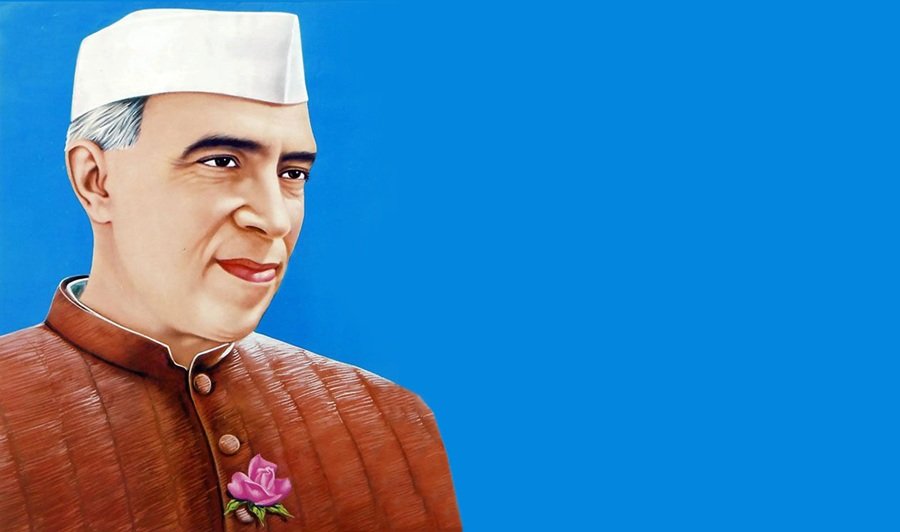
Introduction: Pandit Jawaher Lal Nehru
Pandit Jawaher Lal Nehru modified into no longer simplest a political leader; he have become a person normal via manner of the usage of each privilege and conflict. Born into consolation however drawn in the direction of sacrifice, he have grow to be one of the vital figures in India’s adventure to freedom. People endure in thoughts him as India’s first Prime Minister, however folks who look closer see a logician, a dreamer, and on occasion even a conflicted man in search of to guide a newly independent kingdom through uncertain times.
His existence feels much much less like a immediately line and extra like a protracted communication—with statistics, collectively along along with his u . S . A ., and with himself.
Bio Table
| Field | Details |
|---|---|
| Full Name | Jawaharlal Nehru |
| Popular Name | Pandit Nehru / Chacha Nehru |
| Birth | 14 November 1889 |
| Birthplace | Allahabad (now Prayagraj) |
| Father | Motilal Nehru |
| Mother | Swarup Rani Nehru |
| Education | Harrow School, Cambridge University |
| Profession | Lawyer, Politician |
| Political Party | Indian National Congress |
| Prime Minister | 1947–1964 |
| Death | 27 May 1964 |
| Known For | Building modern India |
Growing Up Between Two Worlds
Nehru’s teenagers have grow to be an extended manner eliminated from the existence most Indians lived on the time. His father, Motilal Nehru, changed into wealthy and properly-associated, and the family lived in comfort. English tutors, super garments, and a sophisticated environment have been part of his early years.
Yet, while a young boy, Nehru sensed that the world outside his home have become very precise. India became under British rule, and inequality grow to be anywhere. That assessment stayed with him.
When he went to England for research, first to Harrow and later to Cambridge, he absorbed Western ideas—technological expertise, democracy, liberal notion. But in preference to distancing him from India, this publicity made him assume greater deeply about what India may also need to become.
Finding His Place within the Freedom Struggle
When Pandit Jawaher Lal Nehru again to India, he need to have without problems lived a quiet existence as a successful attorney. But that direction didn’t keep his interest for extended. Politics drew him in, slowly at the start, then virtually.
Meeting Mahatma Gandhi changed the entirety. Gandhi’s simplicity and readability of reason had a deep impact on Nehru. While Nehru changed into more present day-day and every so often extra impatient, Gandhi grounded him.
Nehru threw himself into the liberty movement. He attended protests, addressed gatherings, and changed into arrested typically. Prison have emerge as a familiar area. But rather than breaking him, those years normal his thinking. He have a look at extensively, wrote letters, and pondered deeply on India’s past and future.
The Night India Became Free
On 15 August 1947, whilst India in the end have emerge as independent, Nehru stood earlier than the country and taken his well-known speech about India’s “tryst with future.”
It changed into no longer best a political 2nd—it felt non-public. Years of battle, sacrifice, and desire came together in that one night time. Nehru emerge as not only a freedom fighter; he was now chargeable for critical a country that had genuinely been born amid ache and partition.
That responsibility changed into full-size, and he knew it.
Leading a New Nation
As Prime Minister, Pandit Jawaher Lal Nehru had to make selections that could shape India for many years. There modified into no clean roadmap. The U.S.A. Have become poor, divided, and improving from the trauma of partition.
He believed strongly in democracy. At a time at the same time as many newly impartial international locations have been slipping into authoritarian rule, Nehru insisted that India may want to continue to be democratic. Elections, establishments, and the rule of thumb of law mattered deeply to him.
He additionally believed in constructing a present day India. Factories, dams, universities—the ones had been not really responsibilities to him; they were symbols of development. He as soon as defined massive dams due to the fact the “temples of cutting-edge-day India,” a phrase that captures his mindset perfectly.
In global politics, he tried to keep India unbiased. Instead of aligning with powerful blocs inside the direction of the Cold War, he observed a insurance of non-alignment. It wasn’t continuously clean, however it meditated his notion that India must make its very own choices.
A Softer Side of Pandit Jawaher Lal Nehru
Away from politics, Nehru had a mild and thoughtful side. He loved books and regularly misplaced himself in analyzing and writing. His letters, mainly those written to his daughter, display a awesome element of him—curious, reflective, and deeply human.
Children held a unique area in his coronary heart. He felt that they represented the destiny of america. That’s why even in recent times, his birthday is drastically referred to as Children’s Day in India.
His relationship collectively along with his daughter, Indira Gandhi, became furthermore giant. He motivated her thinking, and in plenty of strategies, she carried beforehand his legacy.
Not Without Mistakes
It might be unfair to color Nehru as a extraordinary leader. He made picks that have been later wondered. The struggle with China in 1962 was a intense setback and affected his recognition.
Some critics felt that his rules have been too idealistic, particularly in distant places affairs. Others believed his financial technique have become gradual to supply effects.
But what stands proud is that Nehru in no way stopped attempting. He became continuously questioning, adjusting, and studying—even when the consequences have been no longer what he had hoped for.
The End of an Era
Nehru passed away on 27 May 1964. His loss of existence felt just like the very last of a bankruptcy in India’s statistics. For nearly a long time, he had been on the center of the U.S.A. journey.
What he left in the lower back of became not best a record of guidelines or speeches, but a framework—a way of considering India as a democratic, secular, and beforehand-searching kingdom.
FAQs: Pandit Jawaher Lal Nehru
1. Why is Jawaharlal Nehru vital in Indian statistics?
He performed a number one position in the freedom conflict and feature turn out to be unbiased India’s first Prime Minister, helping form the dominion’s early course.
2. What shape of leader become Nehru?
He became considerate and idealistic, someone who believed in democracy, schooling, and development through technological information and organization.
3. Why do children call him Chacha Nehru?
Because of his affection for youngsters and his belief that they represented India’s future.
4. What were his crucial achievements?
He set up democratic establishments, promoted education and agency, and stored India independent in global politics.
5. Did Nehru face grievance?
Yes, mainly regarding overseas coverage and the 1962 war with China, but his everyday contribution stays massive.